
The Concept of Virginity in Archaic Greece and Mythology
Written by Brittany LaVergne for HIS 4334: History of Women in Europe Before 1200 under Dr. Elizabeth Marvel at Baylor University in Waco, Texas
Spring 2021
The use of virginity as a defining characteristic of females both mortal and immoral in Archaic Greece has both been influenced by and has influenced the social norms and legal requirements of women. The stories of Greek mythology and the goddesses of the Pantheon were oral traditions and written down by men, whose own biases and expectations of women affect the ways they describe women. The three primary maiden goddesses are Hestia, Athena, and Artemis, each with a unique connection to their femininity and virginity. The other two Olympian goddesses are Aphrodite and Hera, both different in how they use their sexuality, but are known for their irresponsible and deceptive ways. The primary stories of the goddesses come from epics and hymns composed by Hesiod and Homer and over time the lyric poetry and other forms of literature. The stories of mortal women in mythic legends also have given a look into the perceptions of virginity held by society, and of course my men. By beginning with the Early Ancient Greek works of Hesiod and Homer and moving through the centuries of literary constructions of virginity as well as the contemporary restrictions on women’s sexual agency, this research will show how myth and law worked hand in hand. With virginity not only being a construct but also directly affecting the woman’s connection to their femininity, the literature will also show the patriarchal expectations of women.
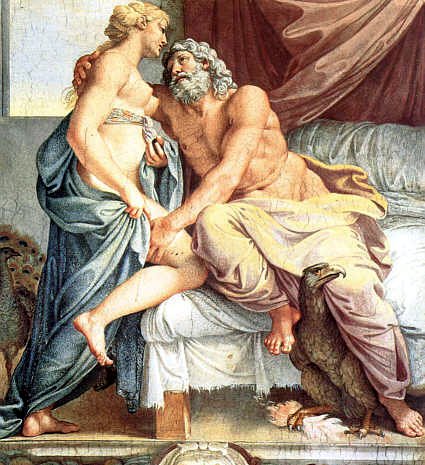


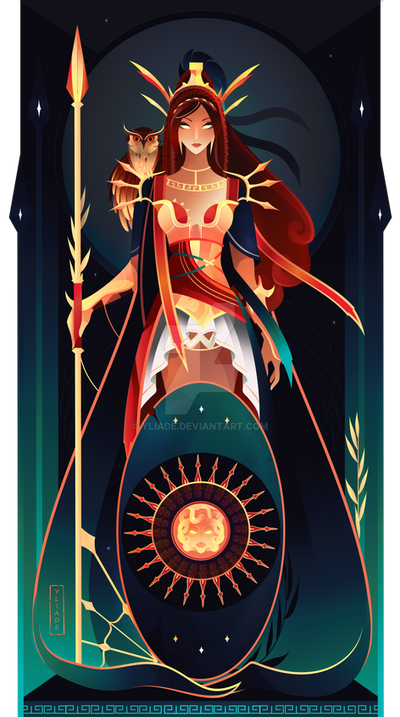
Aphrodite and Athena
Hesiodic works of Theogony and Works and Days give two different understandings of who the Greek gods and goddesses were as well as their expectations for mortals. The Theogony recounts the great tale of Gaia and Ouranos, the birth and rise of Zeus, and all of the Pantheon immortals that come out of them. First is the birth of Aphrodite, the goddess of sexual love. Gaia’s son Kronos castrates the father Ouranos and throws the member into the ocean, and out came of the foam was Aphrodite. “There this majestic and fair goddess came out… Aphrodite, foam-born goddess… she grew out of aphros, foam that is/… fond of a man’s genitals/ because to them she owed her birth.”[1] Since her inception, Aphrodite has been connected to male genitalia, and to sexual enjoyment, as opposed to Eros, which denoted love. The Greek words for sexual intercourse, as opposed to sexual desire that contained love, are respectfully, aphrodisia and eran (to be in love with).[2] The Greeks regarded the sexual act as relating to Aphrodite, but the love that made the act and the desire itself was attributed to Eros, a male god. Not only is Aphrodite connected to the sexual act through the language and her birth, but through her legends, as she is the only goddess to commit adultery and uses deceptive tactics to initiate sexual relationships with men. According to Hesiod, Athena as well was conceived of a man, birthed from the head of Zeus, and has a different relationship with femininity and virginity. Athena was born from Zeus’s head, bypassing the female contribution to the creation of human life once again and angering Hera in the process, but her characteristics are different. Athena is the “weariless leader of armies, dreaded and mighty goddess/who stirs men to battle and is thrilled by the clash of arms.”[3] These are masculine characteristics prescribed to a female goddess who is further classified by her chastity. In the Homeric hymns, Aphrodite’s powers of desire “bring no pleasure to her/ but she finds joys in wars and in the work of Ares.”[4] In fact, the three virgin goddesses are the only three which Aphrodite “can neither sway, nor deceive them/ But none of the others, neither blessed god/ nor mortal man, has escaped Aphrodite.”[5]
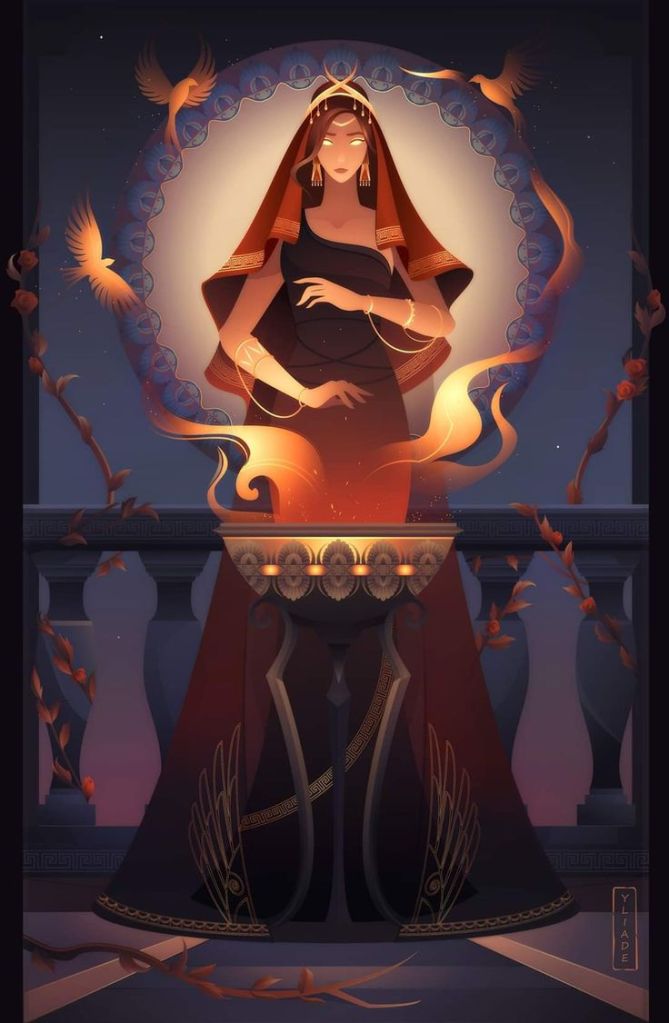

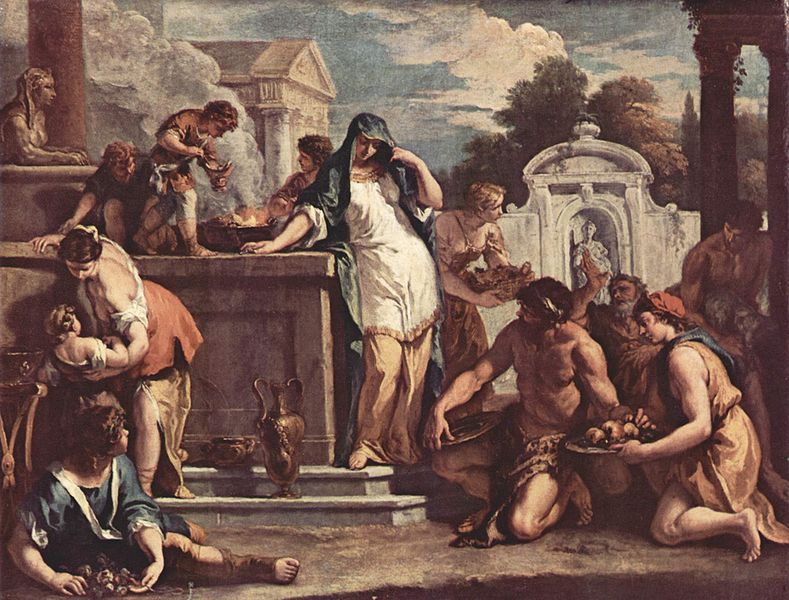
Hestia and Artemis
The other two virgin goddesses, Hestia and Artemis, add more to the duality of femininity and virginity, with their opposing roles in the Pantheon. Hestia is an old maid, whose vow of chastity earned her the highest honors. After Poseidon and Apollo, both tried to be with her and she was unwilling and refused, she “swore a great oath…/ that she, the illustrious goddess, would remain a virgin forever/ Instead of marriage Zeus the father gave her a fair prize…/ In all the temples of the gods she has her share of honor/ and for all mortals she is of all gods the most venerated.”[6] This emphasis on a vow of chastity for Hestia solidifies the two acceptable courses of female life: celibacy and motherhood. While those who swore their virginity were unable to take part in the motherhood life stage, mothers were expected to be chaste after the birth of their children. The connection for mortal women however is “involvement with males was the more usual, and probably the more promising, alternative, since virginity offered freedom only to goddesses like Athena and Artemis, who… by definition were ageless and immortal.”[7] Further, these two maiden goddesses are pushed not only toward virginity but towards masculinization and the absence of femininity. For mortal women, the indication is that while virginity is preferable, motherhood is still the goal, and is the fulfillment of a woman’s femininity; the alternative of virginity means a denial of femininity. While Athena is more engaged with humanity, particularly helping heroic men, “Artemis is primarily concerned with females, especially the physical aspects of their life-cycle, including menstruation, childbirth, and death,” contradicting the separation from her femininity by remaining a virgin.[8] Athena’s archetype of the masculine woman comes from her denial of femininity and sexuality, not only portraying male characteristics but continually siding with men and being suspicious of women’s motives. These goddesses show the complexity of the Archaic Greek perception of femininity and its relationship to virginity, as the patriarchal society expects both virginity and motherhood from women.
Works and Days is another Hesiodic work that communicates the peasant-farmers values concerning virginity, marriage, and humans’ relationships with the gods. The text worked as a social document and “allows us to appreciate class differences in outlook toward institutions” particularly marriage and women’s roles.[9] The text instructs men, “Five years past puberty makes a woman a suitable bride./ Marry a virgin so you can teach her right from wrong./ … check/ every detail, so that your bride will not be the neighborhood joke.”[10] The emphasis here on marrying a virgin is not placed so much on the woman’s chastity but on her innocence and naivety. Marrying essentially a child allows the husband to pick up her education and form her to fit his values and expectations. It also shows that reputation is essential to why virginity is seen as virtuous; as opposed to the Christian perspective that virginity is part of one’s relationship to God and the state of your soul, Greek virginity was focused on how a woman’s actions reflected on the man and parentage for inheritance reasons. The same negative stereotypes of women, particularly those who are not virgins, are seen in the language used. As the Homeric hymns reflect the deceptive work of Aphrodite and the sexual manipulation of Zeus by Hera, Works and Days warns men of women who show evidence of the same characteristics. “Do not be deceived by a woman who wags her tail/ as she chatters sweetly with a greedy eye on your possessions./ You trust a thief when you trust a woman.”[11] The implication that women will use their femininity to manipulate men in order to steal their wealth directly reflects the patriarchal society’s distrust of women. This wisdom that is passed down generationally from man to man to never trust women expanded past the fear of theft, to include all women’s actions, and acted as the rationale to restrict women’s sexuality and their mobility out of fear.
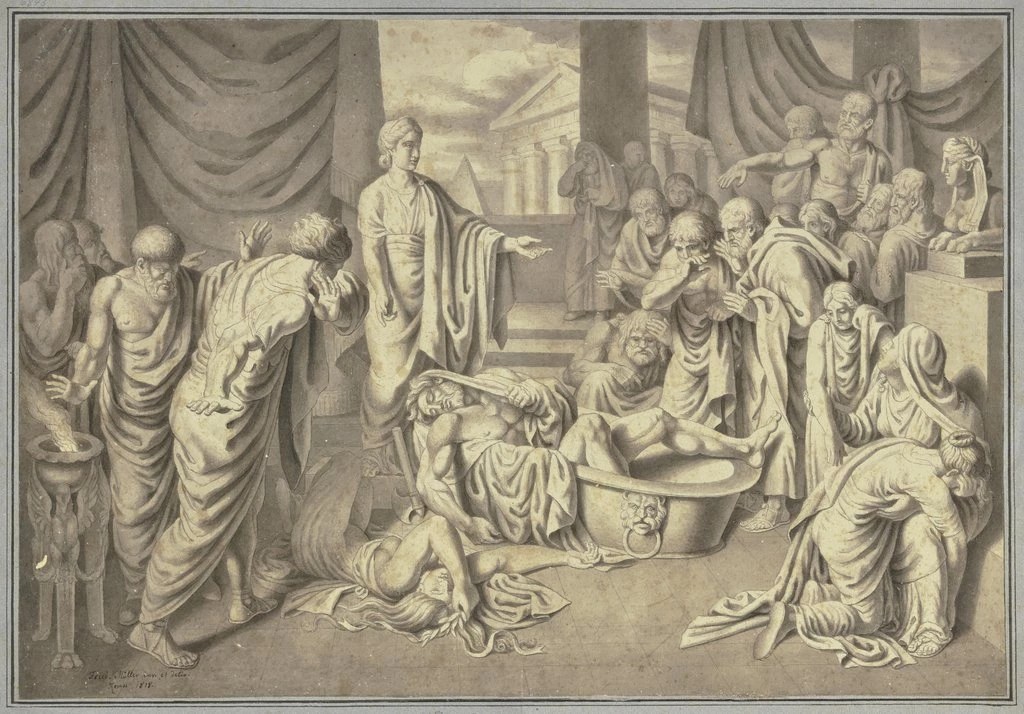
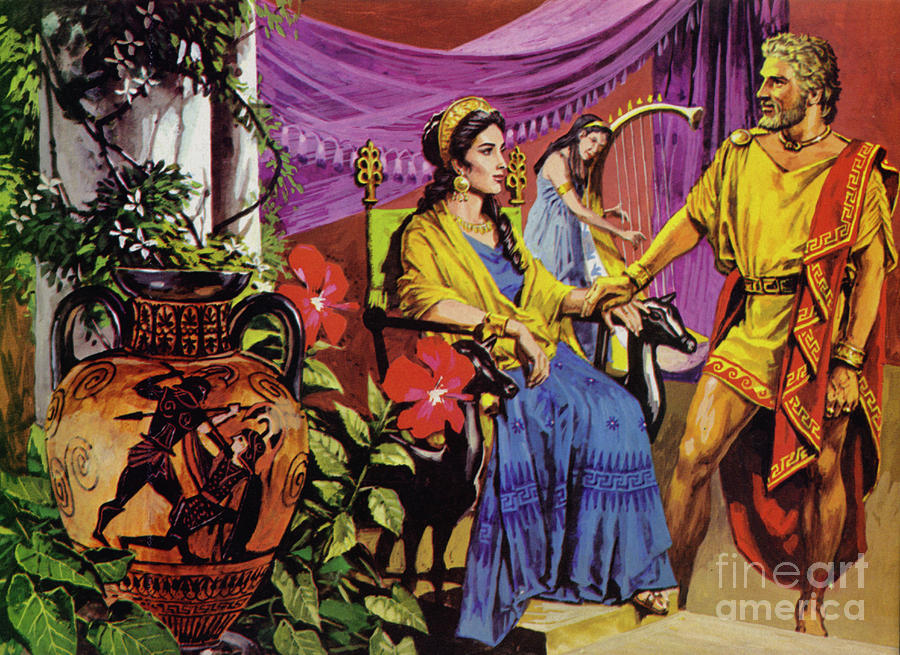
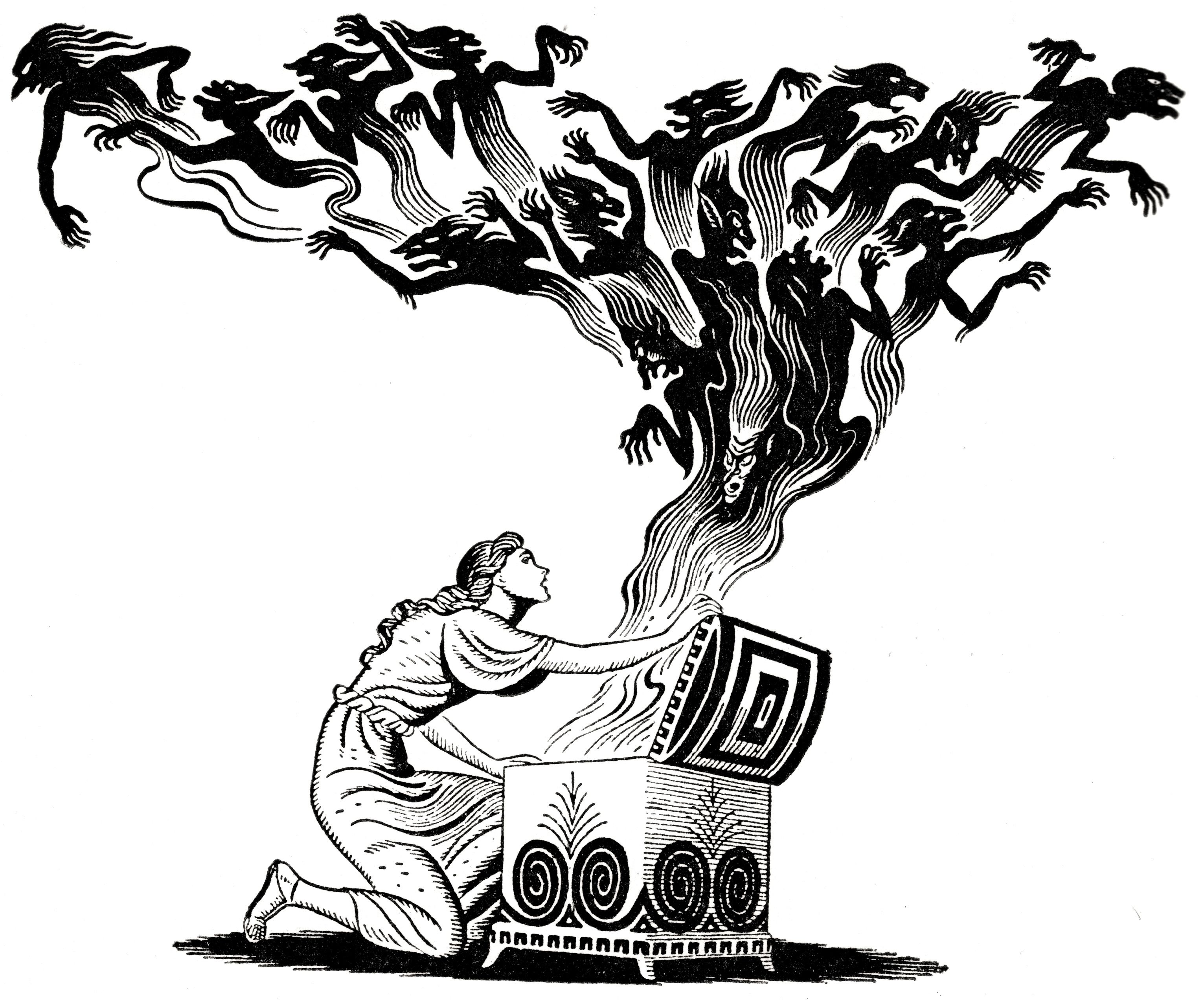
The indications of a misogynistic mentality in Archaic society are seen in expectations, both in norms and legal doctrine. Late Dark Age Greeks were patrilineal and patriarchal, and childbearing was necessary to continue the longevity of the oikos through reproduction. The Homeric works reveal details about the age generations before his life but were still within the living memories of his audience. The codes of behavior for both men and women came out of a war-like period, and strength and competitiveness were important to Greek masculinity. This meant that “valuations of good and bad in respect to women and the behavior expected of them are determined by the male ethic.”[12] This sets up the deep sexual double standards for men and women, both mortal and immortal, in myth and in reality, and their depictions in written works. The Iliad and the Odyssey, both Homeric epics, continue the depictions of female virginity and chastity, as well as the alternative of motherhood, that hold through Archaic Greece into Classical Greece. Both Hesiodic texts, Theogony and Works and Days, also tell of the creation myth of women and the tale of Pandora, the first woman and the one who let all the evils into the world. Semonides and Euripides give later insight through poetry and tragedy of the differing depictions of women and their relationships to femininity and virginity, not only by their use of sexuality but in the language men used to describe them. Homer addresses women’s roles in maidenhood, marriage, and motherhood, and brings the issue of reputation with how Odysseus deals with Penelope. Penelope is revered for her loyalty to Odysseus and her chastity in his absence, especially in comparison to Clytemnestra, the wife of Agamemnon. She is described as “blameless Penelope” and Homer solidifies how “the fame of her virtue shall never/ die away, but the immortals will make for the people/ of earth a thing of grace in the song for prudent Penelope.”[13] Odysseus’s concern for women’s reputations goes beyond his wife and concerns all women in his house. This concern for reputation is also displayed in Nausicaa’s fears, sharing how encounters with men, even her future husband, before marriage can bring harm. Her “fear one may mock us/ … and see how one of the worst sort… will speak, and that would be a scandal against me,/ and I myself would disapprove of a girl who acted… making friends with a man, before being formally married…” [14] Nausicaa’s fears for her reputation are not ill-founded, and she recounts the stories of how women have lost responsibilities and mobility after their reputations had been questioned. Hesiod’s Theogony and Works and Days recount the creation of womankind and the story of Pandora. Zeus plagues mankind after Prometheus gives them fire by creating Pandora, who unleashes evil into the world, and “Zeus made an evil for men, women, conspirators in cruel works. And he gave men another evil to balance a good: the man who escapes marriage and the baneful works of women by preferring not to marry comes to a deadly old age for want of someone to tend him in old age.”[15] When Zeus ordered the creation of Pandora to be “the fair form of a virgin” and to have “a bitch’s mind and a thieving heart.” When “Hephaestus molded from earth a thing like a chaste virgin” and “in her breast the Guide Hermes… put lies, tricky speeches, and a thieving heart,” Pandora was released into the world to bring all the evils and diseases.[16] The construction of virginity is used not as the woman’s state of sexuality, but to describe her physical appearance while using the same language that is attributed to Aphrodite and Hera in their deceitful storylines. Hesiod’s misogyny in these texts again reflects the patriarchal consistency of distrusting women while also teaching men to think of women as a necessary evil essentially. Hesiod’s characterizations of wives in Works and Days show that even when women take the preferred life course of motherhood, he “mentions no contributions by wives to the economy of the household, not even cooking and weaving.”[17] Women are necessary to continue the oikos and to produce a son to inherit the man’s property, and Hesiod further explains that without a wife, men have no one to care for them.
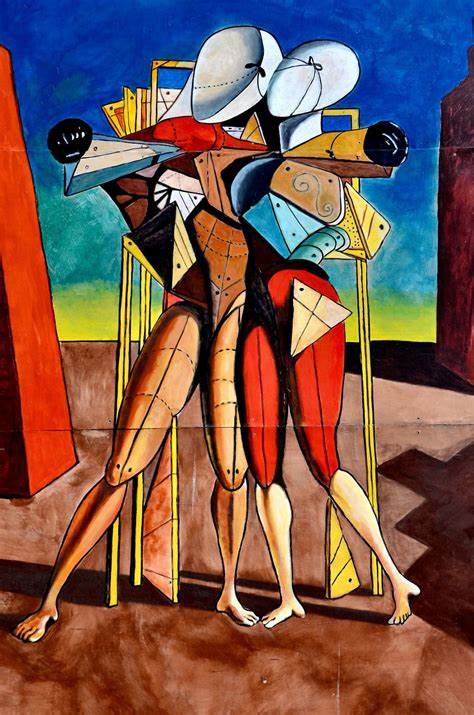
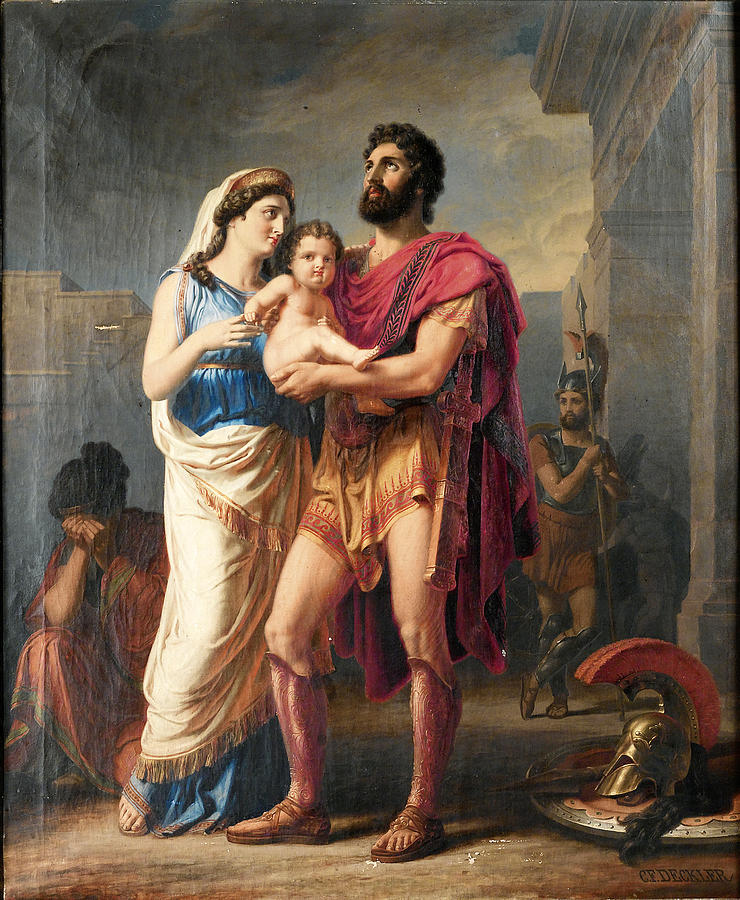
Moving through the archaic era and closer to Classical Antiquity, Euripides’ dramas Andromache, Trojan Women, and Medea give further biased perspectives of what is proper for women by placing a man’s words in women’s mouths. Medea complains how “we women are the most miserable” because their dowries buy a husband to be “a master for our body” and they are stuck in a marriage, since “being divorced harms a woman’s reputation, and she cannot refuse her husband.”[18] In Trojan Women, Andromache’s reputation is dependent on behavior, as “everything that has been found proper for a woman I did… since what causes women a bad reputation is not remaining inside, I put aside my desire [for going out], and remained within the house…” This focus on reputation over everything, as it reflects on the character of the woman and the credibility of the man to which she is in the charge of, is communicated to the audience. Here a man is communicating the ideal behavior of women as being founded on their seclusion, not only their virginity. We are left with this perception of virginity not being dependent on if the woman has engaged in a sexual act but based on if society believes she has had sex, truthful or not. Women are confined to the expectations of men in stories that are used to communicate ideal behavior to any woman who may be listening. In Andromache, the ideals of wives and women are further explained through a man’s words spoken by a woman character, encouraging women to engage in sexual acts with their husbands. Andromache explains further that “it isn’t beauty but virtue that gives pleasure to one’s consort… I drew my husband to be by virtue.”[19] Fifth-century literature through the works of tragedy solidified the social construction of virginity and chastity, and the idea of the private realm and the oikos being the primary association for women.[20] Semonides as well in his poetry organizes women into categories based on their usefulness as wives, using reputation and her reflection on the husband as distinguishing factors. He goes through the tendencies of wives to be lazy and to have an uncontrolled appetite for desire and adultery. His work reflects the attitudes of men in a patriarchal society where women’s bodies are supposed to be under the ownership and supervision of men. At the end of the lyric poem, he describes the good wife that men should desire as a bee. “She is the only one no blame can settle on,” using the same language as to how Homer describes Penelope and how Hesiod describes Hestia. Not only does she refrain from extramarital affairs she “alone takes no delight in sitting with the rest/when the conversation is about sex” making her virtuous not only in actions but in mind as well. When Semonides goes on further to describe the possibilities of a bad wife, he refers to how the neighbors gawp and “smile to see how another man gets fooled.”[21] This idea of the reputation not only affecting a woman’s place in life but having a direct impact on the status of men, provides the rationale behind limiting women’s mobility. It continues the patriarchal message of “never trust a woman.” Again, this repetition throughout literature in Greek antiquity is the virtue a woman can obtain that has value to the greater society, are her purity and chastity. Even in marriage, that virtue must be upheld and the loyalty to the husband must be paramount, in order to ensure her reputation as well as her husband.
Archaic Greek law and education in antiquity further reflect the way not only virginity but keeping their reputation, was reinforced for women. Citizen women in Athens were contained to the home, and unless they were in extreme poverty, did not go far from the home except in the cases of religious ceremonies and funerals. This way “they avoided encounters with strange men who were not their relatives and who might compromise their respectability either by actual sexual contact or by the rumor of it.”[22] Before the legislation was written down, customary rules and traditions would have served as the foundation for societal expectations. Homer along with other sources for oral traditions “would have provided models of proper conduct and the consequences of wrong conduct” particularly in laws concerning the family and inheritance.[23] To reiterate, the importance of inheritance in Athenian law and custom was dependent on the father being able to pass the property on to his son, who is born from his wife; ensuring the child is his was a rationale for the seclusion of women. In the early 6th century with the laws of Solon, even these limited freedoms became more restricted, and institutionalized the “dichotomy between ‘respectable’ women and sexually available ones.”[24] Solon’s laws concerning sex, marriage and women reflected the need to strengthen the state of Athens by ordering the oikos. The invasive restrictions on women’s appearances and their funeral mourning were to target wealthy aristocratic families. Even Plutarch comments on the strangeness of some of these laws, specifically how “he made it unlawful to sell a daughter or a sister unless, being yet unmarried, she was found wanton.”[25] This provision in the law that allows for a man to sell a woman in his charge, specifically as a father or brother, is dependent solely on her virginity status. The only thing that separates a woman of high status, even one from a family of wealth, from a slave in this law is sexual intercourse. Presumably, from the aforementioned evidence, the loss of virginity would make a woman ineligible for marriage, as if it has been communicated to men for centuries that a virgin wife is most preferable because she can be molded, but also to ensure that her bad reputation does not make him a joke. From cities like Athens to the countryside, “both men and women warn their sons about the dangers of associating with loose women who can ruin a man’s life,” even if there are issues in marriage, if the blame can be put on the woman to preserve the man, the society will blame the woman.[26] Analysis of laws enacted around the middle of the Archaic centuries shows how the societal expectations of women as virgins, both before and after marriage, have restricted women based on patriarchal norms. Furthermore, these expectations are not based on the woman’s truthful actions, but on the reputation, she acquires regardless of if she participated in sexual activity or not.
A woman’s activities whether she is an immortal goddess in Olympia or a daughter of an aristocrat in Athens were limited by male domination, both in expectations and law. Even with the archetype of the masculine woman with Athena and Artemis, and all of their power that is worshiped by humans, they only act within the limits Zeus defines. His approval or their cooperation with male deities shows how the lives of goddesses are reflected by the lives of mortal women. Many smaller stories within Ancient Greek mythology, archaic literature, and up to the Classical era, reinforce the idea of virginity being the only virtue a woman can be prescribed. Moreover, they show how virginity has been violently taken from some women leaving them with ruined reputations and even curses. The Homeric and Hesiodic epics and tales reflect the historical context, or at least great influence, of the societal expectations of women being founded on their relationship to sexuality. Within this relationship to sexuality, is each individual woman’s connection to their femininity, or the masculinity imposed on them through denial of sexuality. Myths while being exaggerated forms of women’s experiences, give insight into the types of lives and problems ancient women were to face. The two paths they were confined to, virginity or motherhood, were mutually exclusive but required both the same mindset. Both virgins and married mothers had to deal with ensuring that their reputations were intact, or they risked being sold into slavery, divorce and destitution, abusive isolation, and further disenfranchisement. They both also had to operate in a complementary role with their husbands and survive the issues that came with the sexual double standards applied to them. The three maiden goddesses, Athena, Artemis, and Hestia, are virgins with immense power and authority and are admired and venerated. Athena is the patron of the great city of Athens, Artemis is connected to all the life stages of womanhood despite her personal sexuality, and Hestia is placed in the highest honor at the hearth, to be attended to for all time. These three operate within the confines Zeus sets for them, while the nonvirgin Olympian goddesses of Hera and Aphrodite, are capable of manipulating and swaying Zeus without his knowledge. The patriarchal society’s fear of women that teaches men to never trust women is reflected further in how the three virginal goddesses are helpful to men, while sexually mature ones are manipulative and deceitful. Contemporary and modern women are forced to choose which goddess they wish to imitate in their lives. Athena and be virginal and intellectual but abandon femininity. Aphrodite and be beautiful and praised but be a sex object and cunning. Hera possibly and be a respectable wife and mother but suffer the disloyalty of the husband and is known for anger and manipulation. However, due to the conflicting ways evil and conniving women are represented and how they relate to their virginity or sexuality, it is not sufficient to boil down these representations to only archetypes of virginity, but instead archetypes of the female life. What is continuous throughout the centuries of Greek literature in antiquity is the praise for the virginal woman is individual, whereas blame for the deceitful matron is generalizable, and reflects society’s perception of women and the rationale for restricting agency.
[1] Apostolos N. Athanassakis, trans., Hesiod: Theogony, Works and Days, Shield (Baltimore, MD.: The Johns Hopkins University Press, 1983). 190-201. pp. 18.
[2] K. J. Dover, “Classical Greek Attitudes to Sexual Behavior,” Arethusa 6, no. 1 (1973): 59–73, accessed April 30, 2021, http://www.jstor.org.ezproxy.baylor.edu/stable/26307463. pp. 59.
[3] Athanassakis, Hesiod: Theogony, Works and Days, Shield. 925-926.
[4] Apostolos N. Athanassakis, The Homeric Hymns, 2nd ed. (Baltimore: Johns Hopkins University Press, 2004). 5.9. pp. 42-43.
[5] Ibid.
[6] Ibid. 5.27-32. pp. 43.
[7] Mary R. Lefkowitz, Women in Greek Myth, 2nd ed. (Baltimore, MD.: The Johns Hopkins University Press, 2007), https://archive.org/details/womeningreekmyth00lefk/mode/2up. pp. 42.
[8] Sarah B. Pomeroy, Goddesses, Whores, Wives, and Slaves: Women in Classical Antiquity (New York: Schocken Books, 1995). pp. 5.
[9] Sarah B. Pomeroy et al., Ancient Greece: A Political, Social, and Cultural History (New York: Oxford University Press, 1999).
[10] Athanassakis, Hesiod: Theogony, Works and Days, Shield. 698-691.
[11] Ibid. 373-377.
[12] Pomeroy et al., Ancient Greece: A Political, Social, and Cultural History. pp. 61.
[13] Elaine Fantham et al., eds., Women in the Classical World: Image and Text (New York: Oxford University Press, 1994), https://hdl-handle-net.ezproxy.baylor.edu/2027/heb.04283. qtd. Odyssey 24.194, 24.196-198
[14] Ibid. qtd. Odyssey 6.273-89.
[15] Mary R. Lefkowitz and Maureen B. Fant, eds., Women’s Life in Greece and Rome: A Source Book in Translation, Third. (Baltimore, MD.: The Johns Hopkins University Press, 2005). qtd. Theogony 590-612. G. pp. 25.
[16] Ibid. qtd. Works and Days 42-105. G. pp. 24.
[17] Fantham et al., Women in the Classical World: Image and Text. pp. 39
[18] Lefkowitz and Fant, Women’s Life in Greece and Rome: A Source Book in Translation. qtd. Medea 230-51. pp. 11.
[19] Ibid. qtd. Andromache 205, 221. pp. 12.
[20] Margaret Williamson, “A Woman’s Place in Euripides’ Medea,” in Euripides, Women, and Sexuality, ed. Anton Powell (London: London, 1990), 16–31.
[21] Fantham et al., Women in the Classical World: Image and Text. qtd. Semonides 84, 92-3, 110.
[22] Pomeroy et al., Ancient Greece: A Political, Social, and Cultural History. pp. 239.
[23] Michael Gagarin, “Laws and Legislation in Ancient Greece” (2013): 260.
[24] Pomeroy et al., Ancient Greece: A Political, Social, and Cultural History. pp. 169.
[25] Plutarch, “Solon,” in Twelve Lives, trans. John Dryden (Cleveland, Ohio: World Publishing Co., 1950). pp. 99.
[26] Ernestine Friedl, “The Position of Women: Appearance and Reality,” in Gender and Power in Rural Greece, ed. Jill Dubisch (Princeton University Press, 1986), 42–52, accessed May 1, 2021, http://www.jstor.org.ezproxy.baylor.edu/stable/j.ctvcmxs7q.7. pp. 44.
Bibliography
Athanassakis, Apostolos N., trans. Hesiod: Theogony, Works and Days, Shield. Baltimore, MD.: The Johns Hopkins University Press, 1983.
———. The Homeric Hymns. 2nd ed. Baltimore: Johns Hopkins University Press, 2004.
Dover, K. J. “Classical Greek Attitudes to Sexual Behavior.” Arethusa 6, no. 1 (1973): 59–73. Accessed April 30, 2021. http://www.jstor.org.ezproxy.baylor.edu/stable/26307463.
Fantham, Elaine, Helene Peet Foley, Natalie Boymel Kampen, Sarah B. Pomeroy, and H. A. Shapiro, eds. Women in the Classical World: Image and Text. New York: Oxford University Press, 1994. https://hdl-handle-net.ezproxy.baylor.edu/2027/heb.04283.
Friedl, Ernestine. “The Position of Women: Appearance and Reality.” In Gender and Power in Rural Greece, edited by Jill Dubisch, 42–52. Princeton University Press, 1986. Accessed May 1, 2021. http://www.jstor.org.ezproxy.baylor.edu/stable/j.ctvcmxs7q.7.
Gagarin, Michael. “Laws and Legislation in Ancient Greece” (2013): 260.
Lefkowitz, Mary R. Women in Greek Myth. 2nd ed. Baltimore, MD.: The Johns Hopkins University Press, 2007. https://archive.org/details/womeningreekmyth00lefk/mode/2up.
Lefkowitz, Mary R., and Maureen B. Fant, eds. Women’s Life in Greece and Rome: A Source Book in Translation. Third. Baltimore, MD.: The Johns Hopkins University Press, 2005.
Plutarch. “Solon.” In Twelve Lives, translated by John Dryden. Cleveland, Ohio: World Publishing Co., 1950.
Pomeroy, Sarah B. Goddesses, Whores, Wives, and Slaves: Women in Classical Antiquity. New York: Schocken Books, 1995.
Pomeroy, Sarah B., Walter Donlan, Stanley M. Burstein, and Jennifer Roberts Roberts. Ancient Greece: A Political, Social, and Cultural History. New York: Oxford University Press, 1999.
Williamson, Margaret. “A Woman’s Place in Euripides’ Medea.” In Euripides, Women, and Sexuality, edited by Anton Powell, 16–31. London: London, 1990.
 BRIT LAVERGNE