Knowing the Things I am Above
Written by Brittany LaVergne for BIC 4389 Capstone under Dr. Ann McGlashan and Dr. Lynn Tatum
I always found more of a sense of belonging in the queer community than I have ever felt in a heteronormative society, especially when conservative Christian beliefs are the majority. I was not raised in organized religion or went to Sunday school, my relationship with God and Christianity has been more of a passive affiliation. From the time I was baptized as Lutheran as an infant to around nine years old, I attended church with my parents and went to Vacation Bible School. As problems arose in our home church and I was more involved with competitive sports, we departed from the Church. I never had a negative experience with religion when I was younger. Whenever I had a sleepover with a friend, I would go to church with them on Sunday mornings and pretend like I knew what was going on. I felt out of place but never unwelcomed. I never felt as though I was missing out, until people I went to school with told me about their Communions and other religious ceremonies that seemed to have awakened something in them. I started looking at other religions, taking a liking to Buddhist principles, and then picking and choosing what I thought I knew about Christianity to create my own spiritual framework. Through high school and my years at Baylor whenever a professor or classmate would make a reference to Scripture, I did not or only vaguely understood what they were talking about. Now that I am older and have been more inspired by close friends and my significant other, I have begun a new journey on how I want to apply Christianity to my life. I understand the main ideas: love your neighbor, basic sins and virtues. However, the greater picture of what it means to have a relationship with Jesus Christ the Son and what being a Christian means for me seems for more complicated. My chosen topic is to explore what role religion should play in my life, both in organized religion and how I have developed my own relationship with God. Since the beginning of 2020, I have been inspired by my partner and his family to know Christ for myself. I am confident a higher power exists and that They (God/Him/It/Her) are focused on love and acceptance. Seeing how God and faith have changed people in my life and how a strong sense of faith and trust in Jesus by my partner’s family gives them a sense of peace and a certain light surrounds them. By simply being in their presence I was inspired to find for myself that sense of peace trusting in God brings. I want to ensure that my journey to discover Christ for myself and build my own relationship with God comes only from a place of doing it for myself. By starting this journey I hope to solidify my morals and spiritual framework that Christianity offers. I also believe that doing this topic will help me figure out the role religion, specifically within the teachings of Christianity, should play in my life as I start thinking about how I want my future self to raise children. I believe that by designating time to think about the role of religion in my life and how to grow a relationship with God I can grow in my faith and learn how to cope with my own demons.
My current struggle is learning how to address my past and cope with the guilt I feel as I learn more about what God’s teachings are and what God wants from me. The familiar story for queer people who come from religious families is that they identify with their religion from a young age and grow up to come to terms with their sexuality. My story is flipped as I did not grow up in a strict religious household so finding my sexuality did not come with set religious contradictions in my head. Coming into my sexuality before seriously considering my spiritual journey has left me with a lot of questions. Can I continue to advocate fully for LGBTQ+ rights while being secure in my Christianity? Will people on both sides feel like I am either “too queer” or “not Christian enough” or on the other side will being an outspoken Christian make me less relatable or push queer people away who have had bad experiences with Christians? These are the questions surrounding my struggle as I try to figure out how I want religion to fit into my life. The guilt I feel concerning my past sexual relationships comes from my understanding of how God and the Bible have laid out sexual immorality and valued virginity. I believe the reason God instructs us not to do certain sins like having sex outside of the confines of marriage is that committing that sin leads you off the path God wants you on. I found myself wasting my time, energy, and emotional health on a man who wanted to hide me, instructed me to lie to my friends, and ended up assaulting me in the end. It has taken me almost two years now to be able to process that trauma without delving into a part that scares me: where my responsibility comes in. I avoided and made excuses for red flags, rationalized being taken advantage of and how I got hurt in the end. If I had never allowed that relationship to take root or if I had the Christian upbringing that would keep me from entering into a sexual relationship because I valued my virginity, I would have never been assaulted. That is not me identifying with being a victim or blaming myself but understanding that even if it is 98 percent the offenders’ fault, there is still that 2 percent of my free will that took me down that path. This is where Christianity and God have helped me free myself of that particular guilt. Having someone or something to put that weight on and “let go and let God” has allowed me to forgive myself.
Another pushback of Christianity is the continuous portrayal of women as evil and seducers of sin in the Bible which has led to millennia of women’s oppression. When I look at Christianity and the Bible, it feels more masculine and heteronormative than I feel the core values and teachings need to be influential. This idea of God being the “father” and referred to as a “Him” when I see God as having both feminine and masculine energies as well as existing outside the constructs of a two-gender binary pushes me away. In the moments when I feel more in tune with my spirituality and speak freely, it still feels inauthentic because I am essentially owing my life and salvation to a male essence, particularly when I speak about Jesus. Part of the struggle I have with whole-heartedly bringing Christianity into my life is that there are teachings and traditions that directly contradict my feminist and pro-queer beliefs that I have no plan on altering. I wholeheartedly do not believe that queer people and LGBTQ+ couples cannot have successful and fulfilling relationships because it’s against God’s word. Any time I hear a sermon that is heteronormative, meaning focusing on heterosexual relationships, I get irritated because I feel that it’s easier to just say “between two people” rather than “between a man and a woman.” Being a board member of the LGBTQ+ organization made of Baylor students has allowed me to meet people who are also learning how to balance their queerness with Christianity, however, I have not met someone who felt confident in their sexuality before becoming a devout Christian. This is a two-prong struggle of learning how to lead a Christian life with the guilt of my past and how to apply religion to my future family and vocation.

David: 1 & 2 Samuel
The David story from the beginning of this semester was a story I was vaguely familiar with, particularly the David and Goliath story, but I had never read 1 and 2 Samuel. In 1 Samuel 17 when David kills Goliath, David does so in the Lord’s name. David tells Goliath “I come to you in the name of the Lord of Heaven’s Armies – the God of the armies of Israel, whom you have defied. Today the Lord will conquer you, and I will kill you… and the whole world will know that there is a God in Israel!” (1 Samuel 17:45-46) David’s complete faith and remaining with God every day is the key to being able to trust him in difficult times. God chose David to be king and to kill Goliath because of his unwavering faith and how he loved God. David had complete humility and stayed faithful to his family and continued to love God as he went from a nobody to the anointed king of Israel. As David followed the path God had intended for him and did not overtly commit sin, he was fulfilled in life. David succeeded in the things he did in God’s name because the Lord was with David and David obeyed Him. Even during the most difficult trials and when the odds are not stacked in my favor, I must learn to continue putting my faith in God. David has more of a direct line of communication than normal people have today and praying to God has always confused me as a concept. I do not think God answers our prayers in a direct fashion that people today would prefer; it’s not going to get delivered in two days with Prime. I see it more like if you pray for love, God presents you with an opportunity to express love and care to someone else whether that is family or a random human being. David did not pray for a woman to stray him from his path, but he prayed to be a righteous King and was given the opportunity to prove himself but failed. When he found Bathsheba to be married, he did not view it as a reason to stop but as an obstacle to overcome. When Uriah the Hittite refused to lay with Bathsheba, he did not take the opportunity to come clean, but to further his lies and treachery. When Uriah left for battle, David did not let faith take its course, he organized his death. Sin after sin, David chose to flagrantly defy God for his own desires. The key moral of the David and Bathsheba story and the lesson I have learned from 2 Samuel is that God forgives even the most blatant of sins, but that does not mean the consequences of those sins disappear.
As religion begins to play a more consequential role in my life, I must understand that even when things are dark, I need to make the right choices, e.g., not committing sins and obeying his word, and put my faith in Him. David’s subsequent sins trying to cover up his original sin of sleeping with Bathsheba reminded me of times when I was a kid and would lie once to my parents and in order to stay out of trouble, continue lying and creating new lies. My parents of course would find out the truth and that I was lying, and I would then suffer the consequences of not only my original lie, but my subsequent deception. It also reminds me of the first consistent “relationship” I got into during my second year at Baylor. The relationship was based entirely on sexual interactions and led to me being manipulated into lying to my closest friend. Whenever bad things would happen with him, I would never disclose how I was feeling and lied to my friends about how it was going because I wanted the relationship to be more than it was. I took myself down a dark path that I would make excuses for mine and his actions. As I get older, it is not necessarily telling lies but it has been the sins I have committed and my actions to cover up or minimize the consequences of said sins. This realization connects to the theme of what role religion should play in my life as I need to comprehend that even as I suffer the consequences, I can be forgiven and am still loved by God. I cannot sit in my guilt and shame; it does not make me a worse or lesser person that I am suffering the consequences of my sins, that is the natural process. I believe God labels certain actions as sins because He wants us to make good choices that do not result in negative consequences, but that lead us to be good people. David could have stayed on the path God had laid out for him with his proud family lineage, but his actions lead to the downfall of his family and the abuse of his daughter, Tamar. The way the Rape of Tamar plays out is infuriating to read because it was not David who suffered, it was the countless women Absalom raped to revenge Tamar. Here is another part of Christianity that I struggle with is the repetitive use of female characters to act as seductresses and Satan’s temptations.
Jesus: John & Mark
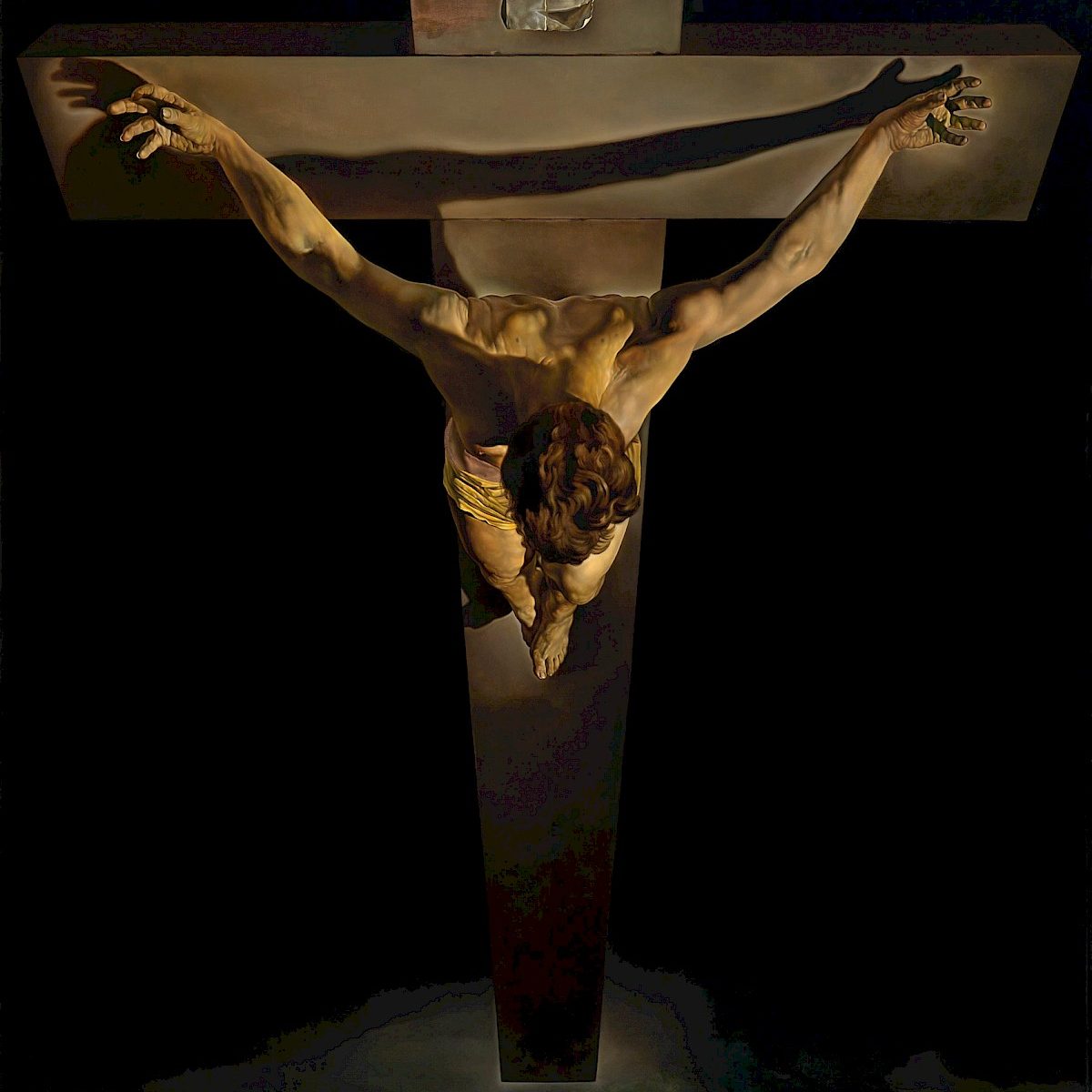
The Jesus narrative in the Gospels of John and Mark helped outline the basic duties of Christians and what direction I can lead my life as I am on this spiritual journey. In the Gospel of John, Jesus has a series of dialogues with seven signs of his divine powers, leading to the conclusion of his teachings emphasizing that acts of service to others and love are the hallmark of being one of His followers. “So now I am giving you a new commandment: Love each other. Just as I have loved you, you should love each other.” (John 13:34) The end of the gospel solidifies this when the disciples are fishing on the boat and receive advice from Jesus, and the moral that followers are most effective when they obey the words of Jesus. Another part of John that resonated with me was back in the third chapter with Jesus and his conversation with the Jewish religious leader, Nicodemus. The Rabbi believed that Jesus was just like him, sent by God to teach and provide information that will help the people of Jerusalem. However, Jesus explains that “God sent his Son into the world not to judge the world, but to save the world through him.” (John 3:17) God essentially sent Jesus to be the new heart or the new force that provides life and purpose to the people. This need to have a childlike faith in God and in Jesus battles with my skeptical mind and impulse to question authority. It is so easy to get caught up in the details of the parables, historical accuracies, and debate Biblical inerrancy when reading between the lines offers more clarity.
In the Gospel of Mark, Jesus’ parables and conversations reveal his teachings and ultimately what it means to be a Christian. Jesus’ message is like a farmer scattering seeds onto different kinds of soil or being heard by different kinds of people. Not everywhere the seed is planted is going to take root and sprout, but “the seed that fell on good soil represents those who hear and accept God’s word and produce a harvest of thirty, sixty, or even a hundred times as much as had been planted.” (Mark 4:20) Jesus also has to explain to his disciples that following Him will not lead them to fame and gaining status but instead will be more like dying and carrying their own cross. “If any of you wants to be my follower, you must give up your own way, take up your cross, and follow me… if you give up your life for my sake and for the sake of Good News, you will save it.” (Mark 8:34-35) The verse from Mark 8:34 reminded me of John Lewis’ advice of giving your life to the service of others and to Love. I feel as though the mustard seed has been stuck in the topsoil of my brain, unable to take root because it is not buried deep enough in my conscious. I do not make each and every decision with God in mind, or sometimes fully comprehend the consequences beforehand. When those consequences come, my first impulse is to try and find an excuse for my own actions because I did not mean for the outcome to turn out this way. Jesus’s disciples did not intend for their denying of Jesus to be part of the sequence of events that lead to Jesus’ death. Yet, like David, those consequences have to be suffered even when God or who we have offended forgives us.

King Arthur
The role of religion in the Arthur story in Le Morte d’Arthur, Mists of Avalon, and Parzival change based on the retelling of the narrative but has elements that can be related to my personal struggle with trying to bring religion into my life. Mallory’s telling of Sir Galahad’s story focuses on him being the pentagon of holy knights and his perfect Christianity allows him to be lifted into Heaven by Christ. The importance of chastity and virginity is valued by men and women and is essential to Christian values. Parzival introduces the character Sigune, whose lover is dead after she refused to marry him and essentially wishes she were not a virgin. This is a shift from the culture that has valued virginity as a high virtue to the concept of noble love. Virginity was never something that was stressed to me growing up but since I had struggles with my self-image and confidence, I believed it would not be an issue. Coming to college and having the realization that there were people who desired me in that way made me feel powerful. In the beginning years of discovering my sexuality, I would compromise my values and go against my conscious because it was fun and exciting; I never knew that people I found very attractive would desire me sexually. It was only after a manipulative relationship during my second year at Baylor that I was able to realize I can set boundaries where I do not have to compromise my core beliefs. What scares me currently is looking at my past sexual relationships and feeling an overwhelming sense of guilt that I should have respected myself more and that God did not want me to go down that path. In the moment and even now I push back against thinking about my past critically and get defensive; citing the secular benefits of exploring sex. Currently, the struggle is coming to peace with my past actions that do not align with what God wants for me while I start bringing religion into my life.
Parzival has two separate storylines that I have found in connection to my own, one that applies to my story more abstractly and another that reminds me of my exact situation, with minor tweaking. First, Parzival unlearning his habits and what he was taught by his mother after being faced with the real world. Gurnemanz advises Parzival to never lose his sense of shame, to have compassion for the needy, and to practice humility. “You must never lose your sense of shame. If one is past all shame what is one fit for?” (Mallory 95) I do not have much shame in my past sexual encounters, and still consider myself to be sex-positive. I need to explore a more Christian point of view on sex that focuses on how to address that retrospective shame. Gurnemanz also gives Parzival surprising advice about women considering the times: to hold them in high esteem and to understand that men and women are the same. “Man and woman are all one, like the sun that shone this morning and what we call “day”. Neither can be parted from the other, they blossom from the self-same seed.” (Mallory 96) While this is not supposed to be a feminist statement in the modern sense but relates to the values of chivalry and courtly love. The feminist reworking by Marion Zimmer Bradley includes the transition of a culture based on female goddesses of the Mists to the more male-dominated Christian religion. Part of the struggle I have with whole-heartedly bringing Christianity into my life is that there are teachings and traditions that directly contradict my feminist and pro-queer beliefs that I have no plan on altering. I wholeheartedly do not believe that queer people and LGBTQ+ couples cannot have successful and fulfilling relationships because it’s against God’s word. Any time I hear a sermon that is heteronormative, meaning focusing on heterosexual relationships, I get irritated because I feel that it’s easier to just say “between two people” rather than “between a man and a woman.” Being a board member of the LGBTQ+ organization made of Baylor students has allowed me to meet people who are also learning how to balance their queerness with Christianity, however, I have not met someone who felt confident in their sexuality before becoming a devout Christian.
Congressman John Lewis, Across That Bridge: A Vision for Change and the Future of America

Photo: Michael Collopy
Faith & Patience
Across that Bridge by John Lewis has been one of the most impactful books I have read during my time at Baylor. The first chapter is titled Faith and there is something admirable about Lewis’s faith not only in the Civil Rights Movement, but in humanity as a whole and in God. Having a certain level of peace and calm because of Faith is something I desire to accomplish; I wish to be able to look at my life and those around me with Faith that God will guide me in my choices and give me his blessings. A question Lewis poses to the reader is “Have you ever considered that the same power you activate in the midst of adversity can also be consciously utilized to bring forward the kind of change or transformation you would like to see in your own life?” (Lewis 18) This question connected with me as I have always been the person striving to advocate on the behalf of others and helping others overcome trials in their lives, but in doing so I put my personal progress, growth, and goals on the backburner. By activating the same power that I use to combat adversity and inequality to motivate myself in my studies and in my Faith, I hope I can grow spiritually, academically, and emotionally. Lewis also recalls how the adversity he and fellow activists faced included being completely disregarded in having anything to offer society and the world because of race. How very few people recognized their “capacity to contribute even the most basic of human gifts—to think with any clarity, to learn new things, to invent or create, to understand the world around us, or even to stand up to defend ourselves.” (Lewis 21) There have been times because of my appearance, my demeanor, and my background that I have not been seen as someone to be taken seriously when it comes to wanting to push myself in academics, or now even in growing in my faith. By not fitting in the box or the mold that society shows for educated people and people strong in their faith, I often make the mistake of believing them and letting those thoughts get between me and my success. God gave me the capacity to be a woman of God and to continue educating myself, but it will only be through faith that this can be accomplished. By being patient and trusting in the process, no matter the length of time, I can learn to trust in God’s plan for me and my journey in Christ.

Photo: Human Rights Campaign
Study & Truth
The chapters Study and Truth did not resonate with me in terms of this struggle with religion as much as they helped solidify what path I want to take in the future. I have been struggling with where I want my future to go in terms of education and a career. I believe I need time to find myself outside of academics and judge myself for once rather than depending on external forces to validate myself. I have been passionate about equality and activism for as long as I can remember, and more recently organizing and participating in protests. Lewis explains how America got to the point of violent racial tension and the struggles he and others went through during the 1960s: ignoring the Truth. The truth of human equality had been systematically obscured by racial segregation and enforced by law, education, religion, and the irrational fears of the white majority. In order to fight these mainstream beliefs and misconceptions, the light of the truth had to be undeniable to those who had been blind to it. By remaining nonviolent and persistent, the Civil Rights Movement exposed the absurdity of segregation. Activists were particular to dress in a conservative manner so they could be identified as upstanding citizens, and they performed the sit-ins to expose the “harmlessness of human connection, the innocence of sharing a meal at a lunch counter or a seat on a bus.” (Lewis 106) Lewis also explored a controversial topic concerning how Black and African American people accepted their subservient place in society due to centuries of forced compliance, and by recognizing a role in this system they can fortify their beliefs in the truth and control their reactions to hatred. While this pushed me back at first, after a re-reading of the text in its entirety I have understood this from my story’s perspective. If my past sexual relationships have taught me anything is that any decision I make, good or bad, regardless of the outcome, is mine alone. I chose to continue a relationship with rose colored glasses on. I chose to take my ex back to my apartment after he had violently pulled a friend out of my car. I chose to try and talk him down from his anger. Recognizing my culpability in my situation is not blaming myself, that will always be the offender’s burden. Addressing it has allowed me to forgive myself for the anger I felt after the incident and to move on without him being held responsible
Act, Peace, Love, & Reconciliation
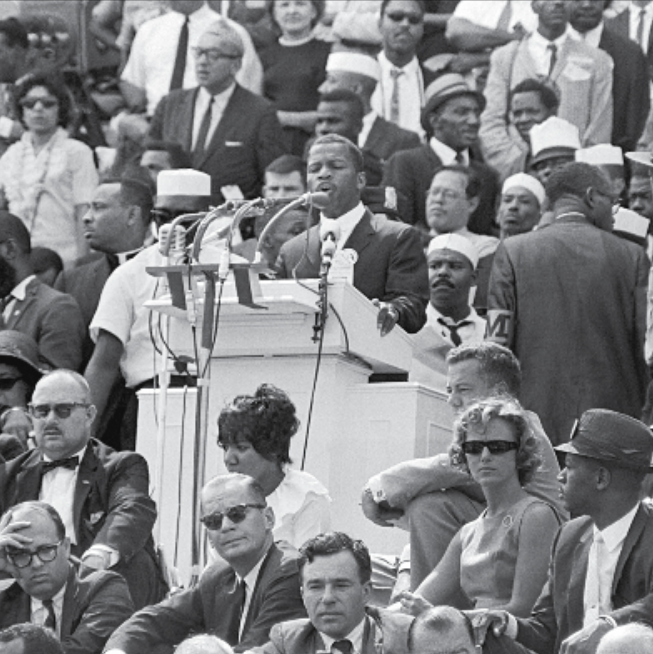
The last four chapters presented the greatest insight I could have learned as a Christian and social activist: “We are all a spark of the divine.” (Lewis 188) In Act, Lewis talks about how lawyers were essential to the Civil Rights Movement because they guided protestors in the judicial process, helped free those who were arrested, and fought for their records to be expunged. At the end of the chapter Reconciliation, Lewis explains an idea surrounding the criminal justice system that is called reformative justice. Now while he does not use this exact term, reformative justice views crime as a symptom of greater societal problems than just one person breaking a law. It addresses what causes people to commit crimes, how it affects communities, has developed different approaches to crime prevention and focuses on how to help communities. Forgiveness, mercy, and compassion are essential to reformative justice, as well as are the principles Lewis cites as being essential to public life. “Living as light means putting away remedies based on fear, retribution, and revenge and acting collectively through government to respect dignity of all humankind–not just those we agree with or whose paths we understand–but every human being.” (206) I believe in an apparently radical point of view that the death penalty should be abolished because I do not believe that any government should have the right to end the life of another human being, regardless of the crime. The United States legal system is by far too imperfect, riddled with systemic racism, and put poor people at a great disadvantage. Rich people can afford better legal teams, defense attorneys are too underpaid and overworked to consistently provide the best legal representation to all their clients. As much as I would like to see every mass murder and child molester burned at the stake, I cannot confidently say that every person who has been or is on death row is 100% guilty, as to say the contrary would simply be false. I address this issue in detail as it has begun to be a legal field I am particularly interested in and one I would love to do volunteer or pro bono work for. Lewis and I both fully understand of the importance of protests, and I whole-heartedly see the value, but after 2020, I have felt the desire to work for more tangible changes.
Transformation Church Sermons: Pastor Michael Todd
There is a series of sermons I watched with my partner this summer from Pastor Michael Todd at Transformation Church called “Relationship Goals Reloaded” and Part Nine is “There Is No Condom For Your Heart.” Pastor Todd outline six main points concerning sex and how God and the Bible teach us about sex. His explanation is that sex is like glue that sticks people together to create “Soul Ties” to unite the pair for life. To keep us from getting tied to the wrong people, God created a container for sex: marriage. When you have sex outside of this container, it can hurt or even destroy other elements in your life and keeps you from living out the life God wants for us. Now, neither I nor my partner are a virgin and have had brutally honest conversations about or lives prior to our relationship and about this sermon as well. The idea of “Soul Ties” has continued to stick with me and I struggle with it independently as I have evaluated my past self and the sexual partners I chose. The conclusion that I and my partner came to is for the only thing we can do now is follow what Pastor Todd suggests, and that is to surrender your sexuality to God.
Another sermon series was titled “Forgiveness University” and in his sermon “Forgive yoU: How To Forgive Yourself.” Pastor Todd explains how forgiveness is not only an action that is for other people, but it is also reflective and there is a process to forgive yourself. From not being somewhere in life you thought you should be to intentional mistakes he calls “flagrant fouls,” forgiving yourself is an important healing process. “Forgiving you produces humility and humility is required to forgive anyone else.” (Todd) This reminds me of a quote the Drag Queen RuPaul uses to sign off on his show RuPaul’s Drag Race: “If you can’t love yourself, how in the hell can you love somebody else?” If you cannot forgive yourself for past mistakes, flagrant fouls, or even when you are just 2 percent responsible for transgressions against you, how can you learn to forgive others. Forgiving yourself also reminds you how much you need God and how to put your burdens on Him. By forgiving myself for the 2 percent, I was able to move past a traumatic experience without the need for an apology from the offender.
How I Now Understand and Looking at the Future
Virginity was never something that was stressed to me growing up but since I had struggled with my self-image and confidence, I believed it would not be an issue. Coming to college and having the realization that there were people who desired me in that way made me feel powerful. In the beginning years of discovering my sexuality, I would compromise my values and go against my conscious because it was fun and exciting; I never knew that people I found very attractive would desire me sexually. It was only after a manipulative relationship during my second year at Baylor that I was able to realize I can set boundaries where I do not have to compromise my core beliefs. What scares me currently is looking at my past sexual relationships and feeling an overwhelming sense of guilt that I should have respected myself more and that God did not want me to go down that path. In the moment and even now I push back against thinking about my past critically and get defensive; citing the secular benefits of exploring sex. Currently, the struggle is coming to peace with my past actions that do not align with what God wants for me while I start bringing religion into my life. I do not have much shame in my past sexual encounters, and still consider myself to be sex-positive. After I need to explore a more Christian point of view on sex that focuses on how to address that retrospective shame.
I do not know if I should be ashamed of my past, but I do know I have a lot more work to do between my queerness, my feminist mentality, and learning how to apply religion to my life wholly. I still feel uncomfortable and inauthentic identifying as a Christian because I feel like I have not earned that, I do not feel like I am confident enough in my spirituality yet. I originally was inspired to work on understanding how Christianity could be more present in my life because I was inspired by my partner’s family and their overwhelming trust and love for God. During the course of this semester, my partner and I watched countless sermons on YouTube, mostly from Pastor Todd at Transformation Church. If we were together or in different cities, we would watch the sermons and take notes for us to have conversations about later. We have different struggles and different demons we have to battle, but we were able to find common themes in our misdeeds. I have spent a lot more time talking through my thinking patterns, biases, and emotions where I have been able to understand them more, but the process of self-improvement is what is difficult. Making the decision to try and weed out toxic thinking patterns that have led me down paths God has not intended for me has left me with more problems than blessings. I am still trying to clean up the mess from a couple years ago and the actions I made after the assault that took me down a dark path. Out for revenge and a desire to warn anyone that came into contact with him dragged me further away from being able to forgive myself for my part in it all. I look at my relationship now and the desire he and I both have to know God for ourselves and to prepare ourselves for our future family and careers. I want to raise my kids in faith and love, but also incorporate what I have learned from the queer community, feminist teachings, and positive sex education. I do not want to promote the fear tactic idea that sex before marriage will send my child to Hell, but rather emphasize that choosing intimate actions outside the container of marriage can lead down a path with consequences.
My spiritual journey is far from over, in fact, it is just the beginning. It is hard to feel as if I am growing spiritually while feeling so trapped in the state of the world at the moment. I have jumped from my hometown bubble to a slightly larger Baylor bubble and inside the smaller BIC bubble, however, I have been exposed to so much more than I ever could imagine. With my reinvigorated love of reading and my desire to grow spiritually, I see this project as the first of many steps.
Living as light means putting away remedies based on fear, retribution, and revenge and acting collectively through government to respect the dignity of all humankind–not just those we agree with or whose paths we understand–but every human being.
Congressman john lewis
The events mentioned here are truthful and from a place of personal expression. Please take my insights as evidence of my personal growth since Fall 2020.
References:
Bible: 1 & 2 Samuel, Mark, John
Lewis, John, and Brenda Jones. Across That Bridge: Life Lessons and a Vision for Change. New York: Hachette Book Group, Inc., 2017.
Le Morte d’ Arthur and Mists of Avalon
Todd, Michael. Forgive YoU: How To Forgive Yourself. FU – Forgiveness University. Transformation Church, Oklahoma, 2020. https://www.youtube.com/watch?v=-UzJtFRnhr0&t=964s.
Todd, Michael. There’s No Condom For Your Heart. Relationship Goals Reloaded. Transformation Church, Oklahoma, 2020. https://www.youtube.com/watch?v=-UzJtFRnhr0&t=964s.
Von Eschenbach, Wolfram. Parzival. Translated by A. T. Hatto. London: Penguin Books, 2004.

FREE PALESTINE
“my rage intensifies because i am not a victim, it burns in my psyche with an intensity that creates clarity. it is a constructive healing rage… [it is] a way for us to learn to see clearly.” – bell hooks


Banning Drag Queens, Overturning of Roe… What’s Next?
If you cannot bring yourself to find empathy for those who have been impacted by recent legislative moves and decisions, I hope you can at least find it in yourself to recognize that everyone involved is a human being the same as you.

Baylor Should Invite Everyone to the Table, Including the LGBTQIA+ Community
Baylor has an opportunity to demonstrate that Christianity is not fearful, that it can be open to rigorous academic discussion around complex social issues with people of countless backgrounds and invite people to have discourse. The best way to demonstrate Christianity is to be open to academic dialogue. As Jesus invited anyone and everyone to…
 BRIT LAVERGNE